Misją Instytutu jest dzialalność naukowo-badawcza prowadząca do nowych rozwiązań technicznych i organizacyjnych użytecznych w kształtowaniu warunków pracy zgodnych z zasadami bezpieczeństwa pracy i ergonomii oraz ustalanie podstaw naukowych do właściwego ukierunkowywania polityki społeczno-ekonomicznej państwa w tym zakresie.
Knowledge base search


MEDICAL PREVENTION
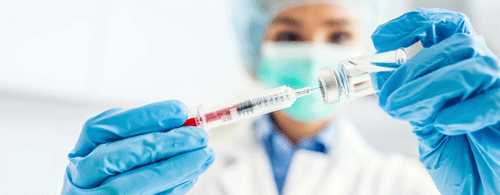
Vaccinations are one of the basic methods of preventing infectious diseases. The use of vaccinations is of great importance in the prevention of viral diseases (e.g. hepatitis B, tick-borne encephalitis and rabies, influenza), and of lesser importance in the case of bacterial diseases (e.g. Q fever and tularemia).
On the EU website - the European Vaccination Information Portal (EVIP), employers and employees can find accurate, objective, and up-to-date information on vaccinations. The EVIP portal was developed by the European Centre for Disease Prevention and Control (ECDC), in partnership with the European Commission and the European Medicines Agency (EMA). It is a resource for accurate and up-to-date information about different vaccines, their benefits and potential side effects, mechanisms in place to monitor vaccine safety, and national vaccination schedules. Its goal is to provide the public with easy access to reliable, science-based information about vaccines and vaccinations, and to help combat vaccine misinformation in Europe. This can help individuals and communities make informed decisions that can reduce the spread of vaccine-preventable diseases, and protect individual and public health.
Employees exposed to contact with harmful biological agents should be provided with professional medical care and undergo initial, periodic, and ongoing tests, taking into account the specificity of occupational diseases caused by biological factors. Appropriately directed health education is also of great importance in the prevention of these diseases.
In order to reduce the risk of infection after contact with infectious material, especially in the case of exposure to blood-borne infections (HBV, HCV, HIV), appropriate post-exposure prophylaxis should be applied.
PROTECTION OF WOMEN'S WORK
According to the Directive 92/85/EEC of 19 October 1992 on the introduction of measures to encourage improvements in the safety and health at work of pregnant workers and workers who have recently given birth or are breastfeeding, both pregnant and/or breastfeeding women are prohibited from performing work that poses a risk of infection with pathogens that pose a risk of harm to the fetus, i.e. toxoplasma and rubella virus, unless the pregnant workers are proved to be adequately protected against such agents by immunization. The exposure to biological agents of risk groups 2, 3, and 4 within the meaning of points 2, 3, and 4 of second paragraph of Article 2 of Directive 2000/54/EC of the European Parliament and of the Council are also prohibited.
PROTECTION OF YOUNG PEOPLE'S WORK
Council Directive 94/33/EC of 22 June 1994 on protecting young people at work contains provisions for employers to ensure the protection of young workers, including health and safety. The Directive prohibits young people from performing work involving exposure to biological agents of risk groups 3 and 4 within the meaning of points 3 and 4 of the second paragraph of Article 2 of Directive 2000/54/EC of the European Parliament and of the Council.

|
GDPR clause Digital accessibility Copyright © Central Institute for Labour Protection - National Research Institute All rights to the works made available are reserved, with the exception of works made available under open access terms. As of August 1st, 2026, the open access provision referred to in the preceding sentence is subject to the Creative Commons CC-BY NC 4.0 license. All licenses previously granted under the Creative Commons CC-BY ND 4.0 license remain in effect. Copying parts or the entirety of other materials not covered by Creative Commons licenses is permitted solely for personal use. |
 |